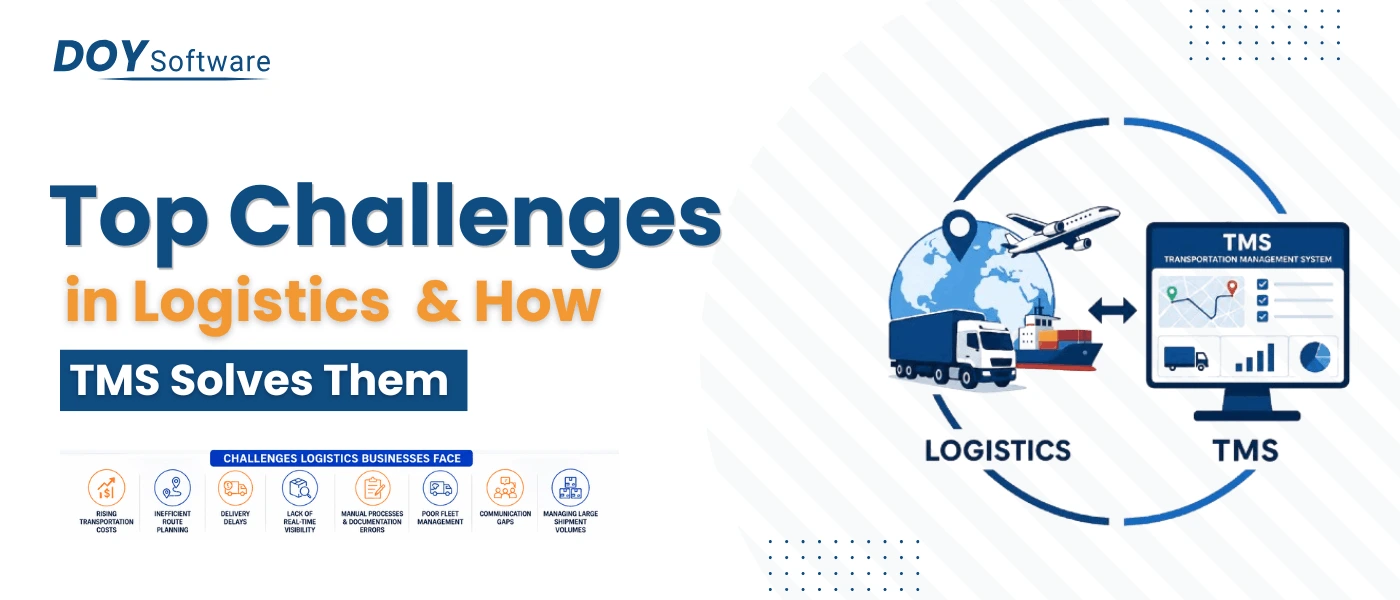
Top Challenges in Logistics & How TMS Solves Them
The logistics industry continues to grow, but managing transportation operations is becoming increasingly complicated for organisations. Companies must simultaneously manage delivery, route planning, fleet management, cargo tracking, and consumer expectations. Logistics operations can become slow, expensive, and inefficient if the necessary technology is not in place.
A Transportation Management System (TMS) simplifies transportation operations and boosts logistical efficiency. Modern systems, such as DOY Software, offer intelligent tools for route optimisation, shipment tracking, fleet management, and logistics automation.
Rising Transportation Costs
Rising transportation costs are one of the most challenging aspects of logistics. Fuel prices, maintenance costs, toll fees, and inefficient delivery routes all have the potential to drastically boost operating costs. Many organisations continue to rely on manual transportation planning, which often results in wasted fuel and extended delivery times.
Transportation Management Software assists firms in lowering these costs through smart route optimisation and automated transportation planning. The technology determines the most efficient delivery routes, allowing drivers to avoid excessive trip lengths and traffic delays. This improves fuel economy and reduces overall transportation costs.
Poor Route Planning
Route planning is a crucial part of logistics management. Poor route planning can lead to delivery delays, higher fuel consumption, and worse driver productivity. Manual route management becomes tough for businesses that handle several shipments on a regular basis.
A contemporary TMS enhances route planning by utilising real-time data and GPS technology. The software automatically chooses faster and more efficient delivery routes depending on traffic conditions, delivery timetables, and shipment priority.
Lack of Real-Time Shipment Tracking
Customers now expect full visibility into their shipments. Businesses that do not use real-time tracking systems may struggle to offer reliable delivery updates. This frequently causes communication issues and diminishes customer trust.
Transportation Management Systems (TMS) give live cargo monitoring and delivery information. A centralised dashboard allows businesses to monitor vehicle positions, shipment status, and projected delivery timeframes.
Delivery Delays and Missed Schedules
Late deliveries can harm a company's brand and lower customer satisfaction. Traffic congestion, inadequate coordination, and manual planning are some of the primary causes of delivery delays.
A TMS can help firms enhance delivery performance by automating dispatch management and transportation scheduling. Logistics management may monitor deliveries in real time and resolve operational issues before they impact customers.
Manual Documentation and Human Errors
Many logistics organisations continue to use spreadsheets and paper-based methods to manage transportation records. Manual documentation raises the possibility of human mistake, missing information, and delayed processing.
Transportation Management Software automates documentation processes while reducing administrative workload. Digital logistics management enhances accuracy and allows organisations to better organise transportation data.
Poor Fleet Management
Fleet management is another significant difficulty in logistics operations. Businesses must routinely evaluate vehicle performance, fuel consumption, maintenance schedules, and driver behaviours. Without effective management, transportation expenses rise, and vehicle breakdowns become more regular.
A contemporary TMS includes extensive fleet management technologies, allowing firms to monitor cars in real time. Centralised reporting solutions enable businesses to track maintenance schedules, assess fuel usage, and optimise driver performance.
Communication Gaps Between Teams
Warehouse employees, drivers, dispatchers, suppliers, and customers must all work together to ensure logistics operations run well. Poor communication between these teams might lead to operational confusion and shipping delays.
Transportation Management Software increases communication by consolidating transportation information onto a single platform. All departments have real-time access to shipment details, delivery timetables, and operational updates.
Difficulty Managing Large Shipment Volumes
As logistics organisations expand, managing huge shipment quantities becomes more difficult. Manual systems frequently fail to manage complicated transportation operations efficiently.
A scalable TMS platform enables firms to handle many shipments from a single system. Automated processes enhance cargo processing, inventory coordination, and delivery management.
Limited Data and Reporting
Traditional logistics systems may have limited reporting capabilities. Without sufficient data, firms may struggle to identify operational issues and enhance transportation performance.
Modern transport management systems offer rich reporting and real-time analytics. Advanced dashboards allow businesses to monitor fuel usage, delivery performance, transportation expenses, and fleet productivity.
Growing Customer Expectations
Customers now anticipate speedier deliveries, live tracking, and improved communication throughout the delivery process. Businesses that fail to meet these standards risk losing clients to competitors.
A TMS helps organisations increase customer satisfaction by enabling faster delivery, more accurate cargo tracking, and better transportation management. Real-time updates and enhanced delivery performance lead to a more consistent consumer experience.
Final Thoughts
Logistics challenges such as growing transportation costs, delivery delays, inadequate route planning, and communication gaps can have a substantial impact on corporate success. Managing transport operations manually is becoming increasingly difficult as consumer expectations rise.
A Transportation Management System assists firms in addressing these issues through automation, real-time tracking, route optimisation, and fleet management capabilities. Businesses that use current TMS software can enhance operational efficiency, save logistics costs, and provide a better customer experience.